ⓒ Written by Atabek Shukurov
Edited by; Dr. Miriam Jacobs
The fact that everything will begin a reversing movement after completion is not a secret. It is the universally applicable Sunnah of God in His creation. For instance,
- The moon begins to diminish once its shape is complete (full moon).
- After it is finished by noon, the daylight begins to diminish.
- After reaching physical and mental maturity, a person begins to deteriorate.
- Despite disagreements among their adherents, the religions are not exempt.
- While Moses was still alive, his message was destroyed.
- While Jesus was still alive, his message was destroyed.
The disciples of both the honorable prophets followed the paganism which was totally demolished by their Prophets, but they opposed the message of their prophets on their own way:
- the former worshipped the Golden Calf,
- while the latter worshipped three after the prophet said, “No Gods but One!”
What about Islam now?
Has the message been altered?
Did God make an exception for Islam for whatever reason, or did the Sunnah of God, “where the things deteriorate after its completion,” harm it?
God said, “His Sunnah is never avoidable!” 33;62. This implies that everyone must follow His Sunnah, unless some people believes that God is able to say one thing and do another.
Then another query: is it possible for God to occasionally lie?
Indeed, three large groups of Muslims have declared that ‘God is capable of lying!’
If so, how can we pinpoint the precise location of His lie?
God is free from all the bad qualities that ignorant, headless, or hypocritical people and organizations assign to Him!
Black Stone and Tawaf

“Squeezing, insulting, and hating one another to kiss the Black Stone” is a relatively minor issue, but it seeks support from very serious foundational principles that can be used to cause very large damages to the pure message of all the noble prophets (PBUT). For this reason, I have purposefully made this aggressive introduction.
Since I covered this topic in my most recent work, “Science of Hadith: Comprehensive Manual on the Hanafi School,” the original references are not included here.
The Main Questions
First Question; What is the Black Stone, and where does it come from?
The Answer;
Athari Scholars say; It is a ruby from Paradise!
Early Hanafi Quran Centric Masters say; It is a random rock transported from one of the valleys of Mecca. Nothing less, nothing more!
Second Question; What is the Black Stone, then, and are any Muslim factions justified in fighting over it next to the Kaaba?
The Black Stone is a White Ruby from Paradise
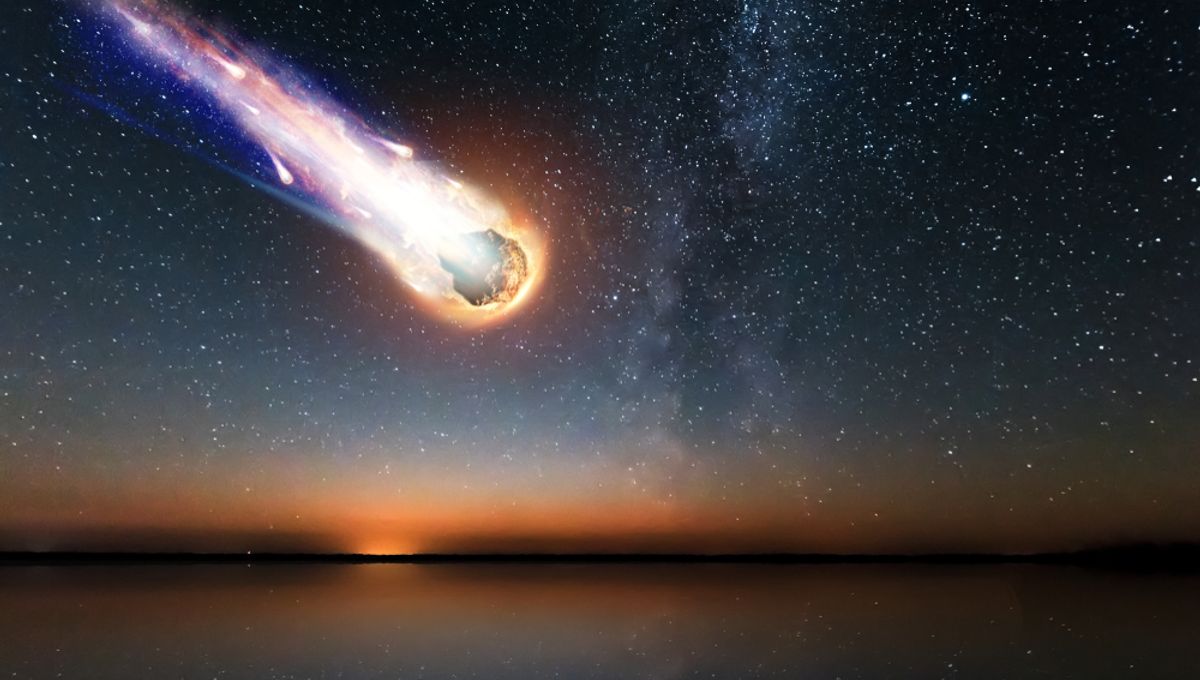
This article will examine the issue in which one of the two Muslim groups’ viewpoints is extensively presented and tested.
First, the Athari perspective;
“The Black Stone (Al-Hajar al-Aswad) has transcended from Paradise, and it was more white than milk, but the sins of the humans made it black” (Tirmidhi), according to Ibn Abbas’ account of the Prophet PBUH.
The Prophet PBUH also told him, “This stone has a tongue and two lips, which will bear a testimony in the Day of Judgement for the one who touched it.”
“The Stone and Maqam (of Ibrahim) are two rubies from Paradise, and God has turned down their light,” Abdullah b. Amr recounted from the Prophet (PBUH). ”If not, the East and West would have been covered by its light.” Ibn Hibban, Tirmidhi and Ahmad.
“I know that you are just a rock that does not benefit nor help!” Omar b. Khattab exclaimed as he approached and kissed the Black Stone. ”I wouldn’t have kissed you if I hadn’t witnessed the Prophet PBUH doing so!” Bukhari.
Considering everything mentioned earlier,
In Islam, the Black Stone holds great significance. It is removed from Paradise. It was initially whiter than the milk. Its incredibly powerful light would be enough to maintain daylight throughout the entire world. It became black due to human crimes. It is the Prophet’s (PBUH) Sunnah to kiss it.
The Athari scholars and Atharo-Hanafi forebears, especially the latter generation Hanafi school, held this view.
Is it a Metiorite, or a random Rock?

The Black Stone is not from Paradise; in fact, it cannot be from there, according to early (Quran-centric) Hanafi masters. Either the story of Ibn Abbas is made up, or the Prophet PBUH was referring to the beliefs of the Jahili Pagans and one of the narrators missed out the part of the narration where the Prophet PBUH said; ‘That what the Jahili Pagans used to say”. Atabek; 288.
The early Hanafi masters stated this for the following reasons:
1. God stated, “There will be whatever the souls desire and the eyes delight in” (43:71) while describing the Paradise, hence this account is in conflict with the Quran.
The Black Stone does not contain the two aforementioned descriptions of the items in the paradise. Therefore, it cannot be from Paradise.
For the emotional Athari Muslims to comprehend, if there were an object from Paradise, it would be incredibly enigmatic and beyond the scope of worldly science.
2. The popular story, which is in line with the passage above where the Prophet PBUH states, “The things in Paradise are such that no one has seen, nor heard, nor even could have imagined!” is likewise at odds with this narration.
Eight of the Companions recount this hadith, which may be found in collections such as Sahih Bukhari, Mu’jam Tabarani, and Musannaf Ibn Abu Shaibah.
Most significantly, this narration of Eight Companions aligns with the intellect and the Quranic scripture mentioned above.
In any case, billions of people—including atheists—see, touch, and think about the Black Stone. However, if the Black Stone was from Paradise, no one would have seen, nor touched nor even could have immagined it.
3. Numerous companions, particularly the more senior ones like Abu Bakr, Uthman, Ali, Umar, etc., would tell the story if the Black Stone were from Paradise. However, the senior Companions did not even mention indirrectly that the stone is from Paradise.
4. However, only Tabe’i Abdullah b. Abbas has recounted it; none of the companions have. To be clear, whereas Athari scholars, including the Atharo-Hanafis, consider Ibn Abbas to be a Companion, the Hanafi school regards him as a Tabe’i, because he misses two possibly three fundamental conditions of the ‘Companions’. Atabek; 202.
Could it be that the Senior Companions don’t know about it?
Or were they aware of this issue but failed to carry out their obligation to disseminate the word, in which case they become non righteous?
Or did they truly overlook such a crucial aspect of the message? If so, then why do we have to respect them?!
5. This narration also contradicts the sense. A human’s vision can verify that it is merely a random rock that is identical to all other rocks. It would undoubtedly differ from the other rocks if it were from Paradise, and nothing else in the cosmos would resemble it. Atabek; 288
Just so people understand, the objects from Paradise would make everyone, including the atheists, to become insane for its unbelievable qualities, and unimmaginable look, and possibly it would have cured all the illnesses just by touching it!
6. Regarding Abdullah b. Amr’s assertion that the Black Stone is a ruby that has transcended from Paradise, everything mentioned above is accurate.
It’s not a ruby, rather a random black stone!
Unlike the black stone, the ruby is a well-known precious stone. Although no laboratory was used for the scientific investigation, one thing is certain: it is not a worldly ruby, never mind being one from paradise.
Even the residents of Paradise will be profoundly impressed by the unimaginable items there, let alone those who remain in our world.
7. Additionally, the assertion that the “Sins of the Jahiliy people” caused it to turn “Black” after it was “whiter than the milk.” In response, the early Hanafi Masters said, “If the Jahili Pagans’ sins made it black, then the good deeds of the Believers should have made it white again!”
Furthermore, as it is seen above the narrations disagree on why it turned black because, according to Ibn Amr’s account, God rejected it on his own.
The Athari academics themselves claim that there is a flaw in both narrations, the one of Ibn Abbas and the one of Ibn Amr.
8. Muhammad, the son of Ali b. Abu Talib, was also informed that Ibn Abbas asserts that the Black Stone originates from Paradise. It is from some of the valleys of Mecca, he retorted.
It’s just a random pebble, then. Atabek; 288.
‘Refutation’ of the Quran Centric position
The Quran-centric Hanafi masters’ arguments are obviously unanswered. With the exception of point number 7, which Athari academics “refuted” with three distinct “responses”;
1. According to Ibn Qutaibah, that (good deeds turning it into white) would have occurred if God had desired it. But an Aadah (habit, law of physics, phenomenon) has been created by God; an object can turn black, but it cannot turn back to white.
2. According to Al-Muhibb al-Tabari, there is a lesson to be learned by staying black. Sins can have an even greater impact on the heart if they can influence the rock!
3. According to Ibn Abbas, it was turned dark since the inhabitants of this world shouldn’t gaze at the beauty of Paradise.
Clearly, there is only one attempt to “refute” point number seven among these three comments;
Ibn Qutaibah’s “refutation” raises serious concerns because God never clarified that it is his tendency to turn all hues black but never white. As a herbalist, I can also attest that it is wholly untrue because I purify the metals, minerals, and herbs. Surprisingly, more than 90% of the cleansed items become white after being pitch black!
Again, though, I pardon Ibn Qutaiba because he had no prior experience creating herbal remedies, therefore he is unaware of the Habit of God in the ‘purification of the substances’.
Let alone being a herbalist, the dark hair of the people turn white when aging! So, it is baseless to attribute an Aadah to God without properly investigating the issue.
Additionally, Quran-centric masters believe that attributing things to God—particularly asserting that God has particular habits—is extremely dangerous unless they are contained in the Quran. But since Ibn Qutaibah is an ultra-Athari scholar rather than a Quran-centric academic, he gets spared!
Furthermore, al-Muhibb’s statement appears to be a side note rather than a response.
In addition to being baseless, the Athari scholars agree that Ibn Abbas’ assertion is weak.
The remaining issues brought up by the Quran-centric masters not expected to be addressed.
What is the Black Stone then!?

If so, what do the Early Hanafi Masters refer to as the Black Stone?
“It is the indication of starting point of the ritual of Tawaf, similar to the Takbir Tahrima is an indication of starting the Salat,” explains Abu Bakr al-Jassas. Jassas, 2;456
Therefore, a round is not complete if someone begins his Tawaf from any other location before or after the Black Stone’s corner.
Just to facilitate people’s comprehension.
Athletes that run long or short distances, for instance, have a starting place. Therefore, an athlete’s performance will be ignored whether they begin running one meter before or after that.
Just by connecting the dots, I think that some of the nobles—possibly Ibrahim or Ismail PBUT—made a sign indicating where the Tawaf should begin to make things easier. So they considered their options:
- If they had drawn a line, the people walking on it would have caused it to vanish in a few days.
- The Tawaf would be disrupted and numerous injuries would result if they placed rocks on the tarmac.
- Therefore, if the first two don’t work, let’s place a sign on the actual corner of the Kaaba, which is called “Rukh Shami,” or the Shami corner. This is why, in contrast to the previous two methods, it is long-lasting and does not result in any harm.
This is the job of the real Black Stone. Nothing less or more.
In light of that:
- This is where the person should begin his Tawaf.
- He should be aware that he has completed one Tawaf each time he passes it, and he shouldn’t suffer from OSD attack.
- It is not acceptable to stop near to the Black Stone when there is a chance that it could hurt someone.
- He is liable for damages if stopping to touch or kiss results in harm or death.
- If he intentionally kills someone by kissing the Black Stone, it is considered second-degree murder, and he is accountable.
- It is permissible to touch it while performing Tawaf only if there is not any harm to anyone. Jassas, 2;458
Islamophobes
The notion made by Islamophobes that Muslims worship the Black Meteorite is completely refuted by the clarification of early Hanafi Quran-centric Masters.
We confirm that it’s just a random rock, and we would have carried out our rituals even if it hadn’t been there!
Obviously, there are more details about this issue that I would like not to discuss here in order to keep the post brief.
Refer to the book “Science of Hadith, Comprehensive Manual in Hanafi School” for the references.
Just to answer to the question raised in the introduction;
Islam is not an exemption!
When God revealed the verse; Today I have perfected your religion for you, completed My favour upon you, and chosen Islam as your way. 5;3, Umar has cried. When he was asked, he said; Anything which is completed starts deteriating! The Prophet PBUH said; ‘That is true!’. Tabari, 8; 81ز
References

Tabari; Tafsir Tabari, Publisher; Dar Hajar, Cairo, Egypt, first edition year; 2001.
Jassas; Sharh Mukhtasar Tawahi, Publisher; Maktabah Imam Dhahabi, al-Hawalli, Kuweit, Second edition year 2024.
Atabek; Science of Hadith, Comprehensive Manual in Hanafi School, Publisher; Shukurov Publishing, London, UK, first edition year 2025

