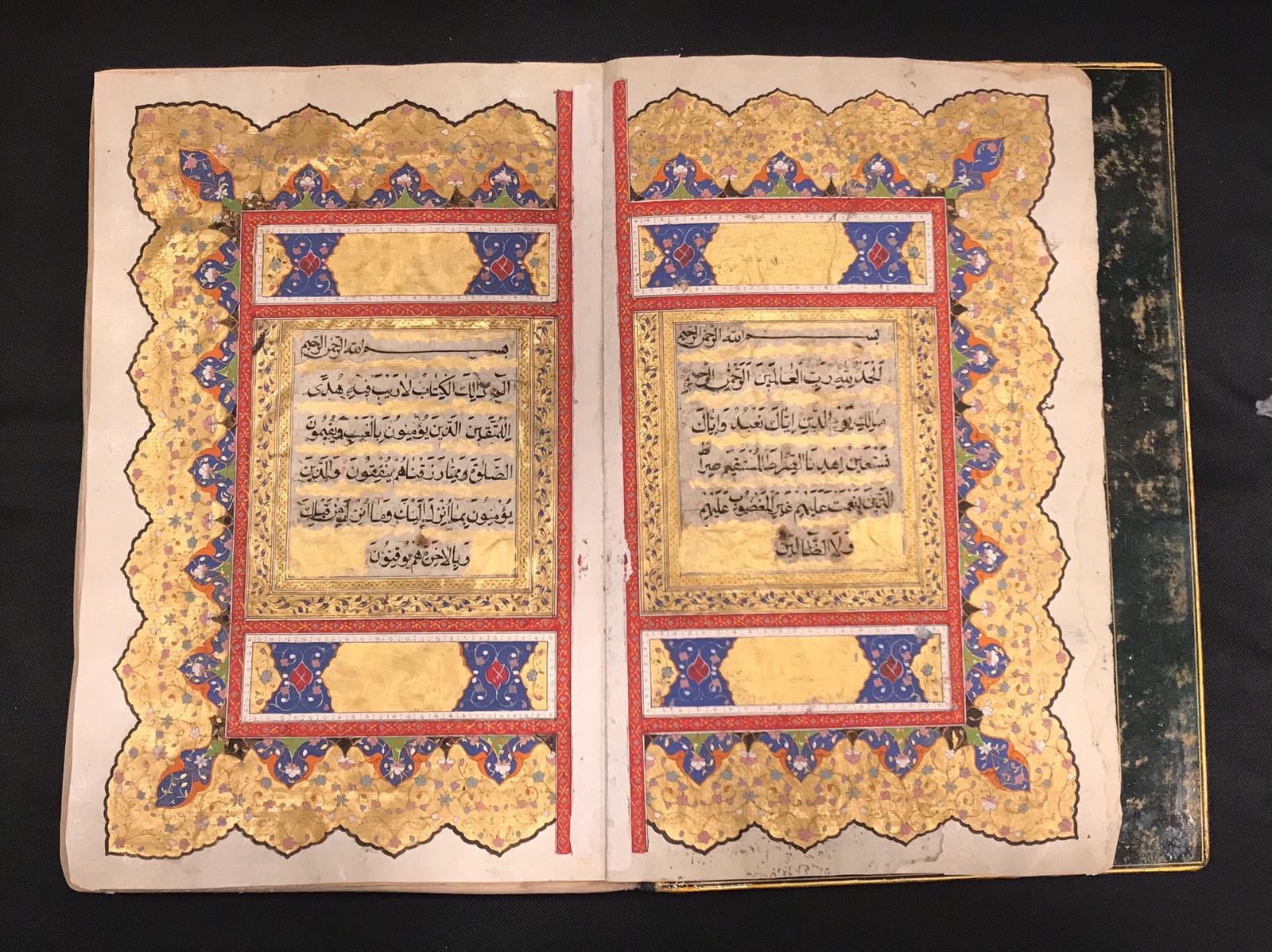
Written by: © Atabek Shukurov
Edited by: Dr. Abraham Anderson
The history of Islamic scholarship has witnessed numerous debates and disputes, many of which were later — and often unfairly — absorbed into matters of creed. In truth, a large number of these issues have little to do with faith, theology, or belief. The significance or triviality of such debates often depended on a range of factors, including political circumstances, sectarian tensions, and the broader intellectual climate of the time.
For instance, the question of whether it is permissible to wipe over leather socks (khuffayn) is a minor issue pertaining to the laws of purification within the broader category of ʿibādāt (acts of worship) in Islamic jurisprudence. Despite its limited scope, this matter came to be included in classical manuals of Islamic creed as though it were a fundamental point of belief. Unsurprisingly, references to it can be found in many major theological works, such as The Creed of Imam al-Tahawi [Tahawi; p25, Dar Ibn Hazm; year 1995], among others.
The reason for this inclusion lies in the historical disagreement between the Athari Sunni school and the Shi‘ah (ironically also Athari in methodology, but following the Ja‘fari school) on this matter. It is likely that one of the early scholars introduced this issue into a work on Islamic creed as a means of expressing opposition to the Shi‘ah position, rather than because it was inherently a matter of belief.
Despite all of this, the issue is not part of Islamic creed and carries no theological weight. It belongs purely to the domain of jurisprudence, not belief. In fact, authentic narrations indicate that even among the Companions there were differing opinions on this matter — for example, Sayyidah ʿĀʾishah (RA) is reported to have rejected the permissibility of wiping over leather socks [Sarakhsi; V1, p98; Mabsut, Dar Ma’rifah, Beirut, Lebanon; year 1989] . (There are other narrations attributed to her as well, but the purpose of this article is not to discuss this particular issue in detail. ibid)
Similarly, there are three opinions transmitted from Imam Mālik;
- Not permitted to wipe at all.
- Permitted only while travelling
- Permitted in both of the situations [Ibn Abdul-Barr; V 2, p 237, Al-Istidhkar, Dar al-Wa’i, Cairo, Egypt, year 1993].
When reflecting the nuanced juristic debate on the matter rather than any doctrinal disagreement.
Furthermore, the issue of appointing a political leader was also incorporated into classical manuals of creed, even though it is unrelated to matters of belief. Its inclusion arose primarily from sectarian disputes rather than theological necessity.
There are numerous examples that illustrate how issues unrelated to theology found their way into classical manuals of creed. However, those well-versed in Islamic history recognise that many other topics—equally irrelevant to matters of belief—could just as easily have been included, given the intellectual and sectarian dynamics of their time.
The examples mentioned above serve to illustrate how, at times, religious scholarship has taken an unintended direction. However, the focus of today’s discussion is on an issue that, had it been debated during the first three generations of Islam as it is today, would almost certainly have been incorporated into the body of Islamic creed.
The issue in question is the age of Sayyidah ʿĀʾishah (RA) at the time of her marriage to the Prophet ﷺ.
When I began teaching the views of the early Hanafi scholars — such as Imam AbūḤanīfah, Zufar, and Sufyān ibn Saʿbān — around 2002, I did not anticipate how difficult it would be for people to approach these opinions with maturity and without emotional or reactionary responses. On that basis, I presented several issues for critical examination, including the topic of the age of ʿĀʾishah (RA) at the time of her marriage.
My approach followed the method advised by Imam Abū Ḥanīfah (RA) himself: to first present the arguments from both sides, then evaluate the evidences critically and objectively. Only once the audience is prepared to understand and engage respectfully should the names of the scholars holding those opinions be mentioned.
My initial intention was to present the issues and their evidences first, followed by the names of the scholars who held those views. However, I soon realised that the discussion was taking an unexpected and emotional turn. As a result, I decided to withhold mentioning the names until the initial wave of strong reactions — particularly, and perhaps primarily, from some of my contemporary Hanafi colleagues — had subsided.
I am convinced that, if contemporary scholars were given the opportunity, they would include this issue in modern manuals of Islamic creed and classify it as one of the defining distinctions between so-called “real Muslims” and the “liberal, Westernised, or modern heretical Muslims.”
I believe the time has come to disclose the names of these scholars and to clarify their viewpoints more clearly — to demonstrate that these opinions do not originate from so-called “modern” or “liberal” Muslims, but from respected authorities within the early tradition. After that, the matter can be left for people to study and reflect upon, allowing each individual to form their own informed conclusion.
“Yes,” say the narrators — and those who followed their narrations.
“No,” but who, exactly, says “no”?
Age of Aishah RA when she married the Prophet PBUH
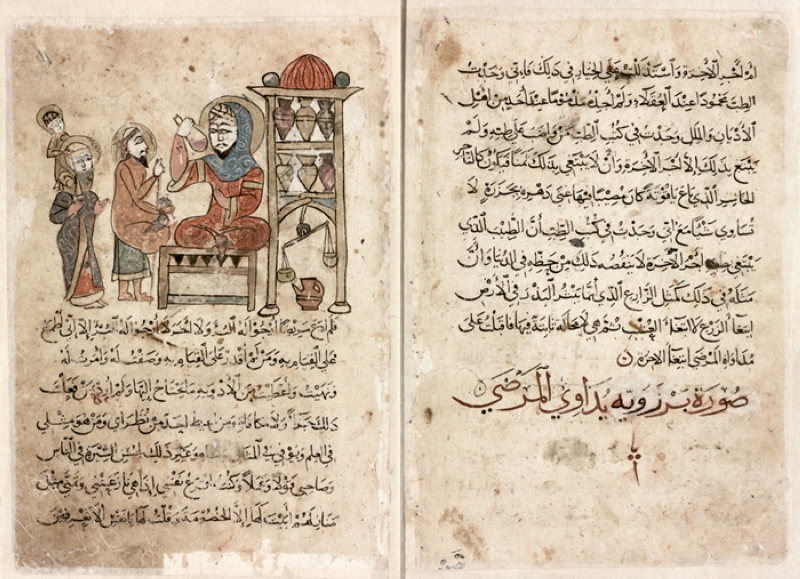
It is not a secret that the vast majority of Muslims — if not nearly all — hold the view that the Prophet ﷺ, aged between fifty and fifty-three, married Sayyidah ʿĀʾishah (RA) in Makkah when she was six years old, and that the marriage was consummated when she was nine.
This view is based on the narration of Sayyidah ʿĀʾishah (RA), recorded by Imams al-Bukhārī [Sahih Bukhari, n3896, p954, Dar Ibn Kathir, Damascus, year2002] , Muslim [Sahih Muslim, n 1422, p559, Bait al-Afkar al-Dawliyyah, Riyadh, KSA, year 1998], and many other leading scholars of ḥadīth — including Imam Aḥmad, Abū Dāwūd, al-Nasāʾī, Ibn Mājah, and others.
ʿĀʾishah (RA) stated that the Prophet ﷺ married her soon after the death of Khadījah (RA), when she was six years old in Makkah, and that the marriage was consummated when she was nine years old in Madinah.
Naturally, once a narration is found in the collections of al-Bukhārī and Muslim, few dare to question or critically examine it.
Furthermore, the narration recorded by al-Bukhārī and Muslim describes the event in considerable detail:
ʿĀʾishah (RA) said:
“The Prophet ﷺ married me when I was six years old. We then migrated to Madinah and stayed in the quarter of al-Ḥārith ibn al-Khazraj. I fell ill until my hair fell out, leaving only a few strands. While I was playing on a swing with some young girls, my mother, Umm Rūmān, came and called me. I went to her, not knowing what she wanted from me. She took me by the hand, and we walked until we stopped at the door of a house. I was breathing heavily, but my breathing began to calm down. She brought some water, washed my face and head, and then we entered the house. Inside, there were some women of the Anṣār who said: ‘With blessings and by the bounty of Allah!’”
“Then my mother handed me over to them, and they looked after me — cleaning me and adorning me. I continued to feel at ease, and nothing startled me except when the Prophet ﷺ arrived shortly before midday. My mother then handed me over to him, and at that time, I was nine years old.”
Furthermore, ʿĀʾishah (RA) mentions in another narration recorded by al-Bukhārī and Muslim that young girls used to visit her and play with her in her house. When the Prophet ﷺ would enter to see her, they would quickly hide behind the curtain.
In the narration recorded by Muslim, ʿĀʾishah (RA) further explains the kind of games she used to play with her friends, saying:
“We used to play with dolls together until the Prophet ﷺ would walk into the house…”
In fact Muslim narrates that when she was taken to consummate the marriage at the age of nine, she had her doll with her. [Sahih Muslim, n 1422, p559, Bait al-Afkar al-Dawliyyah, Riyadh, KSA, year 1998].
Obviously, many more narrations could be cited regarding this issue. However, there is little need to do so, as such accounts are well known and have, unfortunately, come to be regarded by many as part of Islamic creed rather than as historical reports open to scholarly examination.
I am also aware that questioning or critically examining this belief may — or more accurately, will — be perceived by some as taking a person outside the fold of Islam. This is because Imam al-Bukhārī’s book, Ṣaḥīḥ al-Bukhārī, has come to be regarded by many as an inseparable part of the Islamic faith itself. Consequently, questioning any narration contained within it is often viewed as equivalent to questioning a fundamental aspect of Islamic belief.
I am also aware that rejecting this belief often results in one being placed into various labelled categories — such as “liberal,” “modernist,” “heretic,” or “orientalist.” It can even provoke some Athari scholars to deliver lectures condemning the individual, accusing them of “conforming to Western values,” “seeking the approval of Europeans,” “being ashamed of Islam,” “promoting feminism,” or “attempting to appeal to women,” and similar claims.
Therefore, the question arises: Who would dare to challenge a narration found in the collections of al-Bukhārī and Muslim?
As for my position, I will say this: it is the Ḥanafīs — yes, the “stubborn Hanafis,” as some might call them — who would dare to question and critically assess this narration.

The Ḥanafī scholar Imam Abū Bakr ibn Kaysān al-Baṣrī (d. 816 CE / 201 AH) rejected all narrations claiming that the Prophet ﷺ married ʿĀʾishah (RA) when she was six years old, on the grounds that these reports contradict the Qur’an. Without a doubt, he applied — without compromise — the foundational uṣūlī principle of the Ḥanafī school, which states: “If a single-chain narration contradicts a Qur’anic verse, the narration is to be rejected.”
Just to clarify Abū Bakr Abdul-Rahman b. Kaysān al-Baṣrī died when Imam Bukhari was just 6-7 years old boy (according to Imam Dhahabi’s position). Everyone knows, that Imam Bukhari by that time used to attend the circles of Abu Hafs al-Kabir to study Hanafi Fiqh from the Book of Imam Muhammad b. al-Hasan, the direct teacher of Abu Hafs.
Below is the explanation:
The narration mentioned above appears to contradict the following verse of the Qur’an:
“Test the orphans until they reach a marriageable age. Then if you perceive in them sound judgment, return their wealth to them. Do not consume it wastefully and hastily before they grow up. If the guardian is well-off, let them abstain from taking anything; but if the guardian is poor, let them take what is reasonable. When you return their property to them, call witnesses, and Allah is sufficient as a Reckoner.” (Surah al-Nisāʾ, 4:6)
The word “ḥattā” in this verse is khāṣṣ, meaning it sets a clear limit or condition for a matter. When a khāṣṣ statement of the Qur’an is contradicted by a khabar al-āḥād (a solitary-chain narration) or by qiyās (analogy), both of the latter are to be rejected. This is because the khāṣṣ of the Qur’an is qaṭ‘ī (definitive in meaning and authority), whereas both the solitary narration and analogy are ẓannī (probabilistic and open to uncertainty).
For your information (FIY):
Khāṣṣ is a technical term in Uṣūl al-Fiqh (Foundations of Islamic Jurisprudence). It refers to a word that carries an explicit, specific, and particular meaning.
Qaṭʿī denotes a proof that conveys certainty — its meaning and authenticity are definitive and leave no room for doubt.
Ẓannī, on the other hand, refers to a proof that falls short of absolute certainty but can still establish a probable or likelyconclusion.
Therefore, the khāṣṣ of the Qur’an conveys certainty, while a single-chain narration and qiyās can establish only possibility. Naturally, a rational person would not abandon what is certain in favour of something that may or may not be true.
Furthermore, it is a well-known fact that, according to the Ḥanafī school, when a single-chain narration (khabar al-āḥād) contradicts a Qur’anic verse, the narration is rejected due to what is termed implicit disconnection (inqitābatin) — meaning that the report cannot be deemed authentically connected to the Prophet ﷺ in a binding or authoritative manner when it conflicts with definitive revelation.
After understanding the uṣūlī foundations of this issue, the contradiction between the two sources becomes evident:
- The Qur’an states that there is a specific, identifiable age that marks the validity and permissibility of marriage.
- The narration, however, implies that no such age limit exists, and therefore the marriage of ʿĀʾishah (RA) at the age of six was valid.
There is an additional contradiction to consider:
The narrations themselves indicate that ʿĀʾishah (RA) had already been engaged or married prior to the Prophet’s ﷺ proposal. The account relates that when the Prophet ﷺ expressed his wish to marry her, Abū Bakr (RA) replied, “I have already married her to Jubayr ibn Muṭʿim. However, let me first smugle her from them secretly.”
Abū Bakr then went to his daughter who lived in the house of her husband Jubayr’s family and smuggled her secretly, after which Jubayr divorced her. It was only after this that the Prophet ﷺ married ʿĀʾishah (RA). [Ibn Sa’d; V10 p59, al-Tabaqat al-Kubra, Maktabah al-Khanji, Cairo, Egypt, year 2001]
I do not wish to comment on this deeply troubling and offensive implication — that the Prophet ﷺ would propose to someone already married. Such an idea is utterly inconsistent with his noble character and conduct. It is clear that hypocrites and fabricators throughout history have succeeded in introducing numerous false and distorted reports of this nature.
Also, I do not want to comment on Abu Bakr smugling his daughter from the house of her husband and that the Prophet PBUH was fine with it.
My point is that this narration, if taken at face value, would imply that there was no such concept as an “age of consent,”since it suggests that ʿĀʾishah (RA) had been married even before the age of six.
This narration appears to reinforce the earlier point through the tacit approval of the Prophet ﷺ, who did not object when Abū Bakr (RA) stated that his daughter was already married, but instead agreed that she must first be divorced. Once that divorce took place, the Prophet ﷺ then married her. Taken literally, these tacit approvals would suggest that no defined age of consent existed within the framework of such narrations.
Thus, the account of ʿĀʾishah’s (RA) marriage to the Prophet ﷺ at the age of six contains numerous explicit contradictions with the Qur’anic text — not only with the verse previously mentioned, but with several others as well.
Let us now step back and consider the broader picture of this issue as presented in Atharī-oriented Islam:
- The Prophet ﷺ is said to have proposed marriage to a man concerning his daughter, who had already been married before the age of six — possibly at three or four years old.
- The father informed the Prophet ﷺ that his daughter was already married, yet the Prophet ﷺ did not object.
- The father then stated that he would find a way to make this proposal work and to get his daughter’s husband to divorce her, to which the Prophet ﷺwas reportedly pleased, perhaps even smiling and approving the idea.
- The father proceeded to secretly take his daughter’s out of the house of her husband.
- Thereafter, he married his six-year-old, recently divorced daughter to the Prophet ﷺ, who was around fifty to fifty-three years old at the time.
The noble scholar of Qur’an-centric Islam, Abū Bakr al-Baṣrī, states:
- There is a specific age limit in Islam for the validity of marriage; any marriage conducted before that age is void.
- This age limit is explicitly established by a clear verse of the Qur’an.
- The Prophet ﷺ was entrusted with the duty of delivering the Qur’an and demonstrating its correct understanding and practice.
- Any narration that contradicts this Qur’anic teaching must be rejected.
- Therefore, all claims and fabrications suggesting that ʿĀʾishah (RA) was married to the Prophet ﷺ at the age of six are to be dismissed as inconsistent with the Qur’an and authentic Islamic principles.
Based on the above principle, the Ḥanafī scholar Imam Abū Bakr ibn Kaysān al-Baṣrī (d. 816 CE / 201 AH) stated that there is an established minimum age for the permissibility of marriage. If a marriage contract is concluded before that age, it is considered void and not a valid marriage. He further rejected the aforementioned narration on the grounds that it contradicts the Qur’anic verse.
(See: Science of Ḥadīth, A. Shukurov, 2025, p. 246.)
This demonstrates that rejecting the narration regarding ʿĀʾishah’s marriage at six years of age is not a modern phenomenon. Rather, it has deep roots in Ḥanafī Uṣūl al-Fiqh, having been clearly articulated more than 1,240 years ago by one of the early Ḥanafī scholars.
At the same time, I do not deny that many Athari-oriented Ḥanafī scholars accept the aforementioned narration, despite its apparent contradiction with the Qur’anic verse. As I have often remarked, we have many jurists (fuqahāʾ) but very few true theorists (uṣūlīs). Moreover, maintaining consistency with the rigorous principles of Uṣūl al-Fiqh is indeed a challenging task.
However, I do not engage in what some might call “academic terror,” as many tend to do. I prefer instead to state the matter plainly:
There is a fundamental disagreement among Muslims regarding the age of ʿĀʾishah (RA) at the time of her marriage to the Prophet ﷺ:
- Atharī Muslims maintain that she was six years old, because this account appears in Ṣaḥīḥ al-Bukhārī, and anything recorded in al-Bukhārī’s Ṣaḥīḥ is regarded by them as unquestionably authentic and must therefore be accepted.
- Qur’an-centric Muslims hold that God Almighty never contradicts Himself, and that His Prophet ﷺ would never act against divine law. Hence, the story of a six-year-old girl marrying the Prophet ﷺ is viewed as a fabrication, propagated by hypocrites who sought to malign and discredit the noble character of the Prophet ﷺ.
I hope this discussion brings the matter to a close, leaving no further need to revisit it in the future. From this point onward, the issue rests as a personal choice — a matter of which school of thought or interpretive approach one chooses to follow.
 Shaykh Atabek Shukurov an Nasafi
Barakallahu feekum ya Sheikh!
I’ve heard of this twice before, both this year, from posts by Trinidadian Sheikh, Imran Hosein and an Australian academy, ISRA, via YouTube. I let my friends and family know about it too! Masha Allah! I pray for guidance for the ummah and the true scholars of Islam. May Allah subhanuhu wa ta ala protect us and guide us on the straight path. Ameen 🤲 Ma’as-salaama
Sent from Outlook for Androidhttps://aka.ms/AAb9ysg
LikeLiked by 1 person